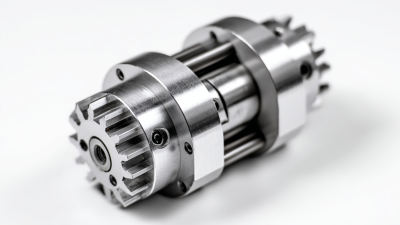
Choosing the best Bearing Lock in 2026 requires more than comparing prices or catalog photographs. Global buyers face different shaft sizes, vibration levels, climates, maintenance skills, and equipment standards. A locking method that performs well on a conveyor may fail on a high-speed fan.
The main options include set-screw locking, eccentric collars, adapter sleeves, taper-lock systems, and clamping-style locks. Each design creates a different balance between holding power, installation speed, shaft damage, and serviceability. Set screws suit many simple applications. They can leave marks on softer shafts. Eccentric collars install quickly. They may perform poorly under frequent reversing loads. Adapter sleeves usually provide strong concentric mounting. They demand accurate tightening and removal procedures.
Small details matter.
Check the shaft tolerance, rotation direction, shock loading, temperature, and available tools. Review manufacturer torque values, material certificates, dimensional drawings, and test evidence. Do not rely on a universal “best” choice. That assumption is convenient, but often wrong.
Bearing authority Tedric A. Harris emphasized a practical principle: “A bearing is only as reliable as the system around it.” His engineering work supports a broader lesson for Bearing Lock selection. The lock, shaft, housing, lubrication, and installation method must work together.
This guide compares leading Bearing Lock types for global purchasing decisions in 2026. It considers performance, maintenance, corrosion resistance, supply consistency, and total ownership cost. Some recommendations remain application-dependent. I would still request field data before approving a final design. A clean catalog specification cannot replace real operating evidence.
Choosing a bearing lock affects shaft stability, service life, and maintenance safety. In rotational equipment, the lock transfers torque between the shaft and bearing inner ring. A poor fit may cause creeping, fretting, or uneven wear. Vibration often reveals the problem first. Practical selection begins with shaft diameter, load direction, speed, and available installation space.
Set-screw locks suit simple assemblies with moderate loads and accessible shafts. Eccentric collars provide quick installation, but they may be less suitable for reversing rotation. Adapter sleeves create strong clamping through tapered surfaces and work well where accurate positioning matters. Lock nuts offer controlled axial tightening, especially in higher-load arrangements. Clamping locks distribute pressure more evenly, although installation quality remains critical. Small errors matter.
Tips: Check shaft tolerance before ordering. Confirm whether the load reverses during operation. Consider dust, moisture, temperature, and cleaning chemicals. Use the supplier’s torque guidance and inspect the locking surface for burrs. Do not treat a standard size as universally interchangeable. A practical lesson is simple: the cheapest lock can become expensive after repeated stoppages. Selection may still be imperfect, so review the drawing, maintenance access, and real operating conditions together.
Choosing the best bearing lock type depends on shaft design, load, vibration, and maintenance access. Global buyers should compare the complete assembly, not only the bearing price.
Set screws offer a compact solution for moderate loads. They grip the shaft directly and suit many simple machines. However, poor torque control can damage the shaft or loosen during vibration. Locknuts provide strong axial clamping on threaded shafts. They work well where accurate positioning matters. Always check thread size, nut thickness, washer support, and tightening torque. A rushed installation can still fail.
Locking collars clamp around the shaft without cutting threads. They allow easier adjustment and often reduce shaft damage. Collars need clean contact surfaces and enough width for stable holding. Adapters use sleeves or precision components to fit bearings onto different shaft sizes. They are practical for replacements, but small tolerance errors can create noise, heat, or uneven wear. No method is perfect. Site conditions matter.
Tips: Clean the shaft before assembly. Measure both shaft and bearing bore. Use a calibrated torque wrench. Mark the locknut after tightening. Recheck movement and temperature after a short test run. If vibration remains, review alignment before increasing clamping force.
| Locking Method | How It Secures the Bearing | Shaft Requirement | Axial Holding Capability | Concentricity and Runout | Installation Complexity | Best-Fit Applications | Main Limitations |
|---|---|---|---|---|---|---|---|
| Set-Screw Locking | One or more radial screws press directly against the shaft to prevent relative rotation between the inner ring and shaft. | Plain cylindrical shaft; a small flat or prepared locking surface is commonly used for improved grip. | Moderate; depends strongly on screw torque, shaft hardness, surface condition, and applied loads. | Good for general-purpose equipment, but tightening can shift the inner ring slightly and introduce eccentricity. | Low; requires alignment, correct tightening torque, and access to the screw heads. | Conveyors, fans, agricultural machinery, light industrial equipment, and moderate-speed rotating shafts. | Can mark or damage the shaft; less suitable for heavy reversing loads, high shock, or applications requiring frequent repositioning. |
| Locknut and Washer | A precision locknut clamps the bearing inner ring against a shoulder, spacer, or sleeve; a washer or locking device prevents nut rotation. | Threaded shaft end, stepped shaft, or a threaded adapter sleeve matched to the bearing bore. | High when correctly tightened; provides positive axial positioning and controlled bearing preload or clearance. | Very good when the shaft thread, shoulder, nut, and bearing seat are accurately manufactured. | Medium; requires torque control, thread protection, and correct adjustment of internal clearance. | High-speed machinery, pumps, gearboxes, machine tools, precision assemblies, and high axial-load systems. | Requires threaded components and accurate adjustment; excessive tightening may reduce bearing clearance and generate heat. |
| Eccentric Locking Collar | An eccentric bore in the collar wedges against the bearing inner ring when rotated in the shaft direction, then is secured with a set screw. | Plain cylindrical shaft; normally no shaft shoulder or thread is required. | Moderate to high for steady loads; locking effectiveness depends on correct collar orientation and tightening. | Generally better than a single set screw because the collar produces a wedging action, but it is not a precision preload system. | Low to medium; simple installation with basic tools and accessible collar clearance. | Material-handling equipment, conveyors, fans, agricultural machinery, and applications with a consistent rotation direction. | Less suitable for frequent reversing, severe shock, or applications where the bearing must be repositioned repeatedly. |
| Clamping Collar / Split Clamp | A split collar or clamping inner ring grips the shaft through uniform friction rather than a single radial point contact. | Plain cylindrical shaft with a clean, reasonably consistent diameter. | Moderate to high, depending on clamp design, friction, surface finish, and tightening torque. | Usually good because clamping is distributed around the shaft and causes less localized deformation. | Low to medium; installation is straightforward, but clamp bolts must be tightened evenly. | Equipment requiring clean shaft surfaces, repeatable mounting, low shaft marking, or convenient maintenance access. | May require more radial space; insufficient or uneven tightening can reduce holding force and increase slip risk. |
| Adapter Sleeve | A tapered sleeve is driven between the bearing bore and the shaft, while a locknut applies axial force to create a tight interference fit. | Plain shaft, generally with a threaded end or suitable nut arrangement; commonly used on non-stepped shafts. | High; the tapered fit provides strong frictional retention and supports substantial radial and axial operating loads. | Good when the sleeve, bearing, shaft, and locknut are correctly matched and installed. | Medium to high; requires controlled axial drive-up and measurement of bearing internal clearance. | Large machines, fans, conveyors, paper equipment, industrial shafts, and bearings mounted on plain shafts. | Incorrect drive-up can over-tighten the bearing; removal may require a correctly positioned withdrawal thread or removal tools. |
| Withdrawal Sleeve | A tapered sleeve is fitted between the bearing bore and a stepped shaft; a nut or hydraulic device drives the bearing onto the taper. | Stepped shaft with a shoulder or abutment for axial positioning; the sleeve is selected for the bearing bore and shaft geometry. | High; the stepped shaft and tapered sleeve provide strong axial location and frictional retention. | Good when proper drive-up, shaft seating, and clearance reduction are controlled. | Medium to high; installation and removal require clearance, correct tools, and careful axial adjustment. | Heavy-duty machinery, large shafts, industrial fans, gearboxes, crushers, and applications needing reliable disassembly. | Needs a suitable stepped shaft and sufficient access behind the bearing; incorrect removal procedures can damage components. |
| Adapter Sleeve with Hydraulic Assistance | Hydraulic pressure assists sleeve mounting or removal, reducing the manual force needed to develop or release the tapered fit. | Compatible tapered sleeve and shaft arrangement with hydraulic connection features; shaft and bearing geometry must support the system. | Very high for properly designed heavy-duty assemblies. | Very good when hydraulic pressure, axial drive-up, and bearing clearance are measured according to the installation procedure. | High; requires trained personnel, calibrated equipment, pressure control, and strict safety procedures. | Very large bearings, heavy industrial drives, mining equipment, steel processing, and assemblies where downtime must be minimized. | Higher equipment cost and maintenance requirements; hydraulic injection can be hazardous if procedures and rated components are not followed. |
Precision deserves careful attention. ISO 492 defines dimensional and geometric tolerances for rolling bearings, while ISO 281:2007 calculates basic rating life as the life at which 90% of identical bearings are expected to survive. A poor locking method can undermine these assumptions through misalignment, fretting, or uneven load distribution. Field maintenance reports commonly identify contamination, insufficient lubrication, and mounting errors as leading bearing failure contributors. Locking design cannot fix bad installation.
Global buyers should match the bearing lock to the application, not only the shaft diameter. A set-screw lock works well on clean, moderate-load conveyor shafts. It is simple, affordable, and quick to install. However, vibration can loosen it when installation torque is inconsistent. An eccentric collar offers stronger holding for rotating equipment, but it needs correct rotation direction and careful tightening.
For heavy loads, frequent reversing, or larger shafts, an adapter sleeve usually provides better concentricity and serviceability. It also suits gearboxes, fans, and process machinery where removal matters. Split clamping systems can reduce shaft damage and simplify field maintenance.
According to Grand View Research’s 2024 bearing market assessment, the global bearing market exceeds USD 120 billion, with industrial automation and transportation supporting continued growth. That scale hides a practical issue: many failures begin with poor locking selection, not poor bearing quality. Reports also differ on market size, so buyers should question overly precise forecasts.
Tips: Check load, speed, shaft material, vibration, moisture, and maintenance access before choosing. Request torque values and installation drawings. Test the lock after thermal cycling when temperatures change sharply. A small mistake here can become expensive. In my experience, buyers often prioritize purchase price and underestimate removal time. That choice may look efficient on paper, but field labor and unplanned downtime can reverse the saving. ISO 15243 damage classifications can help teams connect loosening, fretting, or misalignment with the correct corrective action.
2026 Best Bearing Lock Types for Global Buyers?
For global buyers, the best bearing lock depends on load, shaft design, and maintenance access. Set-screw locking is compact and economical for steady loads. Eccentric collars suit many short-shaft applications, but incorrect tightening can mark the shaft. Tapered sleeves provide stronger concentric clamping and easier removal. They also require accurate shaft and housing dimensions.
International standards should guide every purchase. Check bearing dimensions against ISO 15, while ISO 492 helps verify running accuracy. Locking components should match the bearing series, shaft tolerance, and installation method. Material selection matters too. Hardened carbon steel handles demanding loads, while stainless steel supports humid or washdown environments. Surface coatings may improve corrosion resistance, but coating thickness can affect fit.
I usually request drawings, material certificates, hardness data, and batch traceability before approval. Ask suppliers to confirm bore size, keyway details, radial runout, and recommended tightening torque. Samples should be measured with calibrated tools, not judged by appearance. Check threads, sleeve contact, collar seating, and packaging protection. A certificate helps, but it is not proof of process control. Supplier audits reveal more than polished documents. I still allow room for doubt, because an apparently correct lock can fail after heat, vibration, or repeated removal.
The chart shows the number of practical incoming-quality checkpoints typically required for each bearing locking method. Checks include shaft fit, locking torque or thread condition, axial runout, material and corrosion verification, and installation-related preload control. Higher counts indicate more inspection points rather than higher product quality.