What is Bearing Design and How to Choose the Right One?
Bearing design plays a critical role in various engineering applications. It directly impacts system performance and reliability. The global bearing market is projected to reach $128 billion by 2026, according to recent industry reports. A well-designed bearing can improve efficiency and reduce costs. However, selecting the right bearing is not always straightforward.
Several factors influence bearing design. Parameters such as load capacity, operating speed, and environmental conditions must be considered. Many engineers struggle with balancing these requirements. Inappropriate choices can lead to premature failure. A study by the American Bearing Manufacturers Association highlighted that more than 40% of bearing failures are due to incorrect application.
Industry expertise emphasizes the importance of thorough analysis in bearing design. This includes understanding material properties and lubrication methods. Reliable designs stem from comprehensive testing and real-world data. Devices like finite element analysis tools assist in simulations. However, real-world conditions often differ from simulated ones. This disparity can lead to unexpected challenges, emphasizing the need for continuous learning in bearing design.

What is Bearing Design?
Bearing design is a crucial aspect of mechanical engineering. It involves selecting the right bearing type for specific applications. Proper bearing design ensures efficient operation and longevity in machinery.
When designing a bearing, consider load capacity, speed, and environment. Think about how these factors influence performance. Different materials offer varied durability. Bearings can be made from steel, plastic, or ceramics. Each material has its pros and cons.
Tips: When choosing bearings, always analyze the specific application. Look at the installation conditions carefully. Ensure the bearing can handle expected wear and tear.
Proper alignment and lubrication play vital roles in bearing longevity. Misalignment can lead to premature failure. Similarly, inadequate lubrication can cause overheating. These issues need attention throughout the design process.
Tips: Regular inspections can prevent major failures. Monitor conditions regularly to ensure everything is within acceptable limits. This proactive approach will save time and costs down the road.
Key Factors in Bearing Design
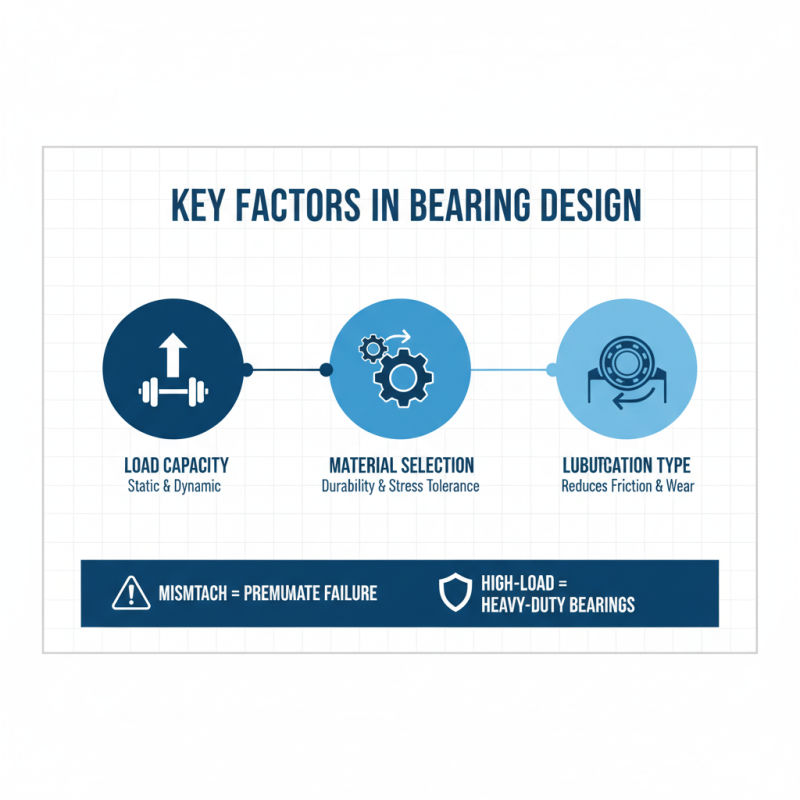
When selecting a bearing, understanding key factors in its design is crucial. Load capacity is a primary consideration. Bearings must handle both static and dynamic loads effectively. A mismatch can lead to premature failure. For instance, in high-load applications, it's essential to select bearings designed for heavy-duty performance.
Another critical factor is the type of lubricant. Lubrication affects friction and wear. Choosing the right lubricant can enhance bearing life significantly. Some designs require specific lubricants to function optimally. Ignoring this aspect can lead to diminished performance and increased maintenance costs.
Temperature tolerance must also be assessed. Bearings operate under various environmental conditions. High temperatures can change material properties. This affects performance and durability. Designs that allow for thermal expansion can prevent issues. Reflecting on these details ensures a well-informed choice. Each factor, while distinct, plays a vital role in the overall efficiency of the bearing system.
Types of Bearings and Their Applications
Bearings play a crucial role in machinery. They facilitate smooth movement and reduce friction. The right bearing type can significantly impact machine performance. There are various types of bearings, each suited for different applications.
Ball bearings are common in everyday devices. They can handle both radial and axial loads. This versatility makes them ideal for electric motors and household appliances. Roller bearings, on the other hand, are designed for heavy loads. They offer better load support than ball bearings. Cylindrical roller bearings are often used in automotive applications, where durability is key.
Spherical bearings are useful in applications requiring angular misalignment. They provide flexibility and smooth operation. Magnetic bearings are gaining attention in high-speed applications, with reports suggesting they can reduce friction losses by up to 90%. Despite their advantages, they are complex and can be costly. Before selecting a bearing, consider the specific needs of your application. An improper choice can lead to machine failures and increased maintenance costs down the line.
Types of Bearings and Their Applications
This bar chart illustrates the distribution of common applications for various types of bearings, showing that ball bearings are the most widely used, accounting for 40% of applications.
Steps to Choose the Right Bearing
Choosing the right bearing is crucial for machinery efficiency and longevity. Several factors determine the best option. Start by assessing the load requirements. Know the maximum load-carrying capacity for your application. An undersized bearing can lead to premature failure. Consider the speed. High-speed applications need specific bearing types designed to handle increased rotation.
Material choice is also critical. Bearings come in various materials, each with benefits and downsides. For example, metal bearings offer strength while plastic ones reduce weight. Evaluate the operating environment as well. Temperature and exposure to moisture or contaminants affect bearing lifespan and performance.
Tips: Always double-check specifications before making a decision. Miscalculations can lead to significant downtime. Consult with experts if unsure about technical aspects. Sometimes, it's better to seek professional advice than to rely solely on assumptions. Take the time to research thoroughly; it pays off in the long run.
What is Bearing Design and How to Choose the Right One? - Steps to Choose the Right Bearing
| Bearing Type |
Load Rating (N) |
Speed Rating (RPM) |
Application |
Material |
| Ball Bearing |
5000 |
20000 |
Electric Motors |
Steel |
| Roller Bearing |
8000 |
15000 |
Automotive Applications |
Chrome Steel |
| Thrust Bearing |
3000 |
10000 |
Heavy Machinery |
Bronze |
| Spherical Bearing |
7000 |
12000 |
Construction Equipment |
Stainless Steel |
Common Mistakes in Bearing Selection
When selecting bearings, common mistakes can lead to significant performance issues. One frequent error is overlooking load capacity. According to industry studies, about 30% of failures stem from using a bearing incapable of handling the applied stresses. Proper load analysis is crucial for durability and function.
Another area of concern is misunderstanding operating conditions. Environmental factors, such as temperature and humidity, greatly influence bearing life. A report by the International Bearing Association highlights that nearly 25% of premature failures happen due to inadequate environmental considerations. Ignoring these details can lead to costly downtime and repairs.
Moreover, organizations often neglect the importance of lubrication. A study from the Bearings Technical Committee stated that improper lubrication accounts for up to 40% of bearing failures. Users should educate themselves on appropriate lubrication types and schedules for their specific applications. This knowledge can greatly enhance performance and longevity.