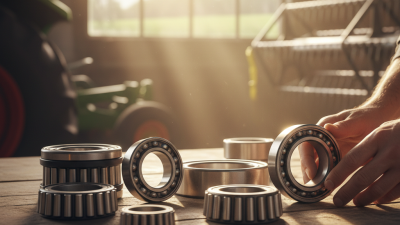
Top 10 Agricultural Bearing Manufacturers for Global Buyers
Agricultural Bearings work in demanding places: dusty fields, wet orchards, grain elevators, and equipment that may sit idle between seasons. A bearing inside a planter or combine must handle vibration, changing loads, and exposure to dirt and moisture. Small differences in sealing, lubrication, and fit can affect service life and maintenance needs. Details matter.
This guide to the Top 10 Agricultural Bearing Manufacturers for Global Buyers offers a practical starting point for comparing suppliers. It considers factors such as product range, technical documentation, customization options, distribution reach, and access to engineering support. Buyers should also check dimensions, load ratings, operating speeds, sealing arrangements, and compatibility with the machine before ordering. A familiar brand name alone is not a specification.
The right choice depends on the application. A bearing suited to a high-speed implement may not be ideal for a slow-moving, heavily loaded joint. Ask manufacturers for current catalogs and verify critical requirements with a qualified engineer or equipment maker. Availability and service can vary by region, too. Rankings can simplify a shortlist, but they cannot replace careful evaluation. And yes, that takes time. This overview is intended to help global buyers ask better questions, compare options more consistently, and make decisions grounded in actual operating conditions—not just broad marketing claims.
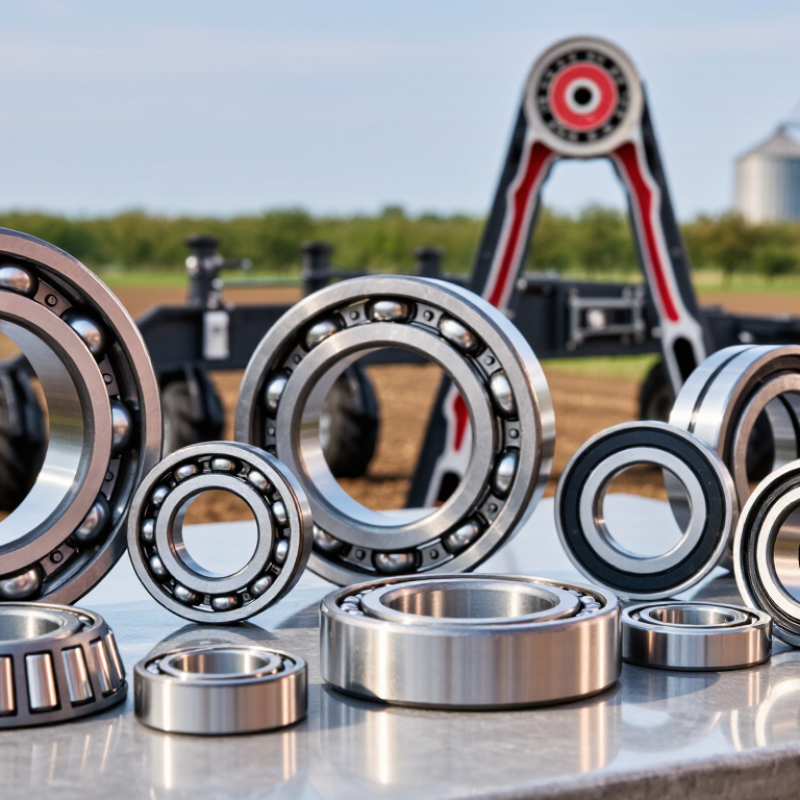
Agricultural Bearings: Types, Uses, and Buyer Requirements
Top 10 Agricultural Bearing Manufacturers for Global Buyers
Agricultural Bearings: Types, Uses, and Buyer Requirements
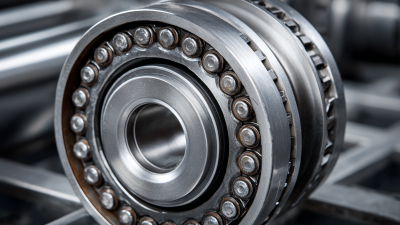
Agricultural bearings support rotating parts in tractors, planters, harvesters, and irrigation equipment. Common options include deep-groove ball bearings for moderate loads, tapered roller bearings for combined loads, and spherical roller bearings where shafts may misalign. Mounted bearing units can simplify installation on machinery frames. Dust gets everywhere. Effective seals help keep out soil, chaff, and moisture, but seal design should match operating speed and exposure.
A bearing’s job matters as much as its name. A wheel hub faces impact and changing loads, while a seeder may need steady rotation through long planting days. Buyers should check shaft dimensions, load ratings, speed, temperature range, lubrication method, and available space. Fit matters too. A correct bearing can still fail early if its housing is misaligned or its lubricant is unsuitable. That detail is easy to overlook.
When comparing suppliers, ask for clear specifications, material and heat-treatment information, quality records, and practical guidance on installation and relubrication. Confirm whether replacement units are readily available and whether packaging protects them during storage. In wet or abrasive conditions, sealing and corrosion resistance deserve extra attention. There is no universal best type; field conditions vary, and published ratings cannot capture every shock or cleaning routine. A small trial under real operating conditions can reveal issues that a catalogue does not.
Criteria for Selecting the Top 10 Manufacturers
For agricultural bearing buyers, compare manufacturers against the conditions the parts will actually face: dust, moisture, shock loads, washdown, and long operating hours. The Grand View Research bearing-market report estimated a global market value of USD 132.3 billion in 2023 and projected 8.5% annual growth through 2030. This signals a broad, competitive supply base, not equal product quality. Ask for load ratings, material and heat-treatment specifications, sealing options, and batch traceability. Check whether life calculations follow ISO 281 and failure analysis uses ISO 15243. A polished catalogue is not proof.
Request test records for vibration, noise, temperature, and dimensional accuracy, then compare them with your application’s limits. Confirm that stated service life assumptions match real speeds, loads, lubrication, and contamination. Ask for agricultural field references and local technical support, plus clear lead-time and warranty terms. Market forecasts describe demand; they do not rank suppliers. One detail is often missed: a low purchase price can be offset by extra downtime or frequent replacement. Verify claims with sample inspection or an independent audit where practical.
Tips: Give each candidate the same operating conditions and scoring sheet. Keep the evidence, not just the sales presentation. A small trial can reveal fit issues early.
Profiles of Ten Agricultural Bearing Manufacturers
Profiles of ten agricultural bearing manufacturers are most useful when they reveal practical strengths, not just product lists. OECD-FAO’s Agricultural Outlook 2024–2033 projects global agricultural and fish production to grow by 1.1% annually. More machinery in service makes sealing, load capacity, and maintenance access important buying checks. Details matter.
The profiles can distinguish a high-volume maker focused on standard sizes; a precision specialist serving seed drills; a supplier of sealed units for dusty fields; a producer of tapered rollers for heavy hubs; and a regional factory offering short lead times. Other useful profiles include a custom-design shop for unusual shafts, a maker with heat-treatment expertise, a supplier emphasizing traceable quality testing, a producer offering repair support, and a specialist in corrosion-resistant materials. These are capability types, not ranked endorsements.
Compare evidence behind each claim. Ask for load ratings, operating-temperature limits, seal details, and test methods. ISO 281 provides a recognized method for calculating rolling-bearing rating life, but actual service life also depends on fit, lubrication, contamination, and installation. Request samples or inspection records where possible. A polished catalogue is not field proof. Check whether the manufacturer can explain failure patterns from similar equipment, and whether replacement parts remain available during the season. One weakness: published specifications rarely capture the mud, vibration, and hurried maintenance of real farms.
Comparing Product Range, Quality, and Global Support
Comparing agricultural bearing manufacturers means looking beyond catalog size. A useful range should cover common inserts, mounted units, and replacement options in practical dimensions. Check seal designs, lubrication provisions, and housing compatibility for each application. Dusty grain handling may need stronger contamination protection than a sheltered conveyor. A wide catalog can still hide gaps.
Quality claims need evidence. Ask how critical dimensions, heat treatment, and running noise are checked, and whether inspection records can be supplied by batch. Confirm that product samples match the drawings and stated tolerances. A certificate alone does not show how a bearing performs under shock loads or washdown. Field-failure data can help, though it is not always complete. That uncertainty deserves attention.
Global support is just as important as product quality. Compare response times, technical help across time zones, spare-parts availability, and realistic delivery estimates. Check whether instructions and packaging suit the destination and storage conditions. Fast answers help. During harvest, a delayed replacement can idle a machine, so local stock may matter more than a small price difference. I would still verify promised stock before relying on it; supplier websites can lag behind actual inventory.
Agricultural Bearings: Standard Bore Sizes
A practical product-range reference for global buyers. The chart shows bore diameters for common 6000-series deep-groove ball bearing sizes; it does not represent manufacturer ratings or quality scores.
How Global Buyers Can Evaluate Agricultural Bearing Suppliers
A supplier’s catalogue is only a starting point. Agricultural bearings face dust, water, vibration, shock loads, and long periods without inspection. Ask how the supplier tests sealing, heat treatment, dimensional accuracy, and lubrication performance. Request batch traceability and sample inspection records, not just a certificate. ISO 281 defines basic rating life, L10, as the life reached by 90% of a group of identical bearings under stated conditions. It is a calculation, not a field-life guarantee. Ask which load, speed, and reliability assumptions were used.
The risk is practical. FAO’s 2023 report on progress toward the Sustainable Development Goals estimated that 13.2% of food was lost between harvest and retail in 2021. Bearing failure is only one possible source of equipment downtime, but a seized conveyor or grain-handling unit can disrupt operations. Compare suppliers on failure-analysis support, replacement lead times, and performance in similar machinery and environments. Ask for references from users working in dusty fields or wet processing areas. Then check whether the proposed bearing matches your actual shaft fit and maintenance schedule. I still double-check those details. A neat specification sheet can miss a muddy reality.